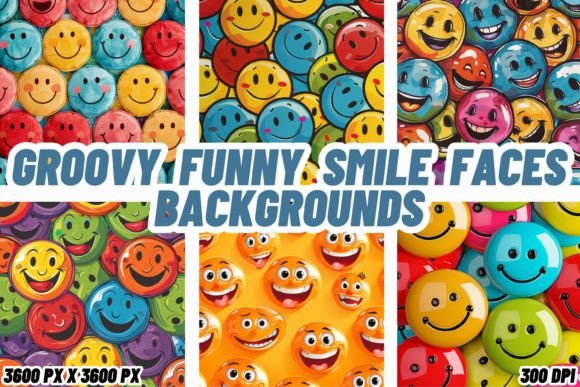
Infuse Joy with Groovy Funny Smile Faces Backgrounds
Understanding the Visual Language of Joy
In the landscape of modern typography and digital design, there is a persistent search for assets that convey genuine emotion. While we often look to a specific serif font for authority or a clean sans serif font for neutrality, sometimes the message requires something entirely different. That is where the concept of the Groovy Funny Smile Faces Backgrounds comes into play. This is not a traditional typeface in the sense of letters and numbers; rather, it is a specialized set of design assets functioning as a visual motif. The aesthetic is rooted in the retro-futuristic "groovy" era but filtered through a contemporary, playful lens. It features an array of quirky, hand-drawn, and digitally rendered smiley faces that exude positivity.
The personality of these backgrounds is unapologetically loud and cheerful. Visually, they rely on high-contrast colors, wobbly outlines, and exaggerated expressions to create a sense of movement and humor. For a designer or brand strategist, understanding this visual language is crucial. It moves away from the rigid grid systems of corporate design and embraces a more organic, fluid style. When you implement Groovy Funny Smile Faces Backgrounds, you are signaling to your audience that the content is approachable, low-pressure, and intended to entertain or delight. This is particularly valuable in an era where consumers are often overwhelmed by sterile, minimalist corporate branding.
Strategic Applications for Digital and Print Projects
Determining where these assets fit best requires an analysis of the project's goals. For social media graphics, the application is obvious. Platforms like Instagram and TikTok thrive on scroll-stopping content. A feed that utilizes Groovy Funny Smile Faces Backgrounds can break up the monotony of standard photography. They work exceptionally well for "quote of the day" posts, sale announcements, or engagement stickers in Stories. The whimsical nature of the smiley faces encourages interaction because they feel less like an advertisement and more like a shared moment of levity.
Beyond the screen, these backgrounds hold significant weight in packaging design and editorial layouts. Imagine a subscription box for snacks or wellness products; wrapping the items in tissue paper printed with these groovy faces elevates the unboxing experience. It adds a tactile layer of surprise that reinforces brand identity. In editorial design, such as a magazine feature on mental health or lifestyle trends, using these backgrounds as chapter dividers or sidebar textures can soften the visual hierarchy, making the publication feel more accessible and human. Even in web design, these assets can be used as hero image textures or loading screen animations to reduce user frustration with a touch of humor.
The Psychology of Playfulness in Branding
How does a collection of smiley faces influence brand perception? It taps into the psychology of play. When a small business owner or entrepreneur uses Groovy Funny Smile Faces Backgrounds, they are actively choosing to reject cynicism. This creates a specific emotional response in the viewer: relief and joy. In a crowded market, a brand that makes you smile has a distinct advantage in audience engagement. It fosters a sense of community; people want to be around positive energy.
Furthermore, these backgrounds can serve as a counter-balance to more serious design assets. If your primary brand font is a heavy, bold display font or a serious serif font, the smiley faces can act as the "voice" of the brand that handles customer service or community updates. This versatility allows for a complex brand personality—professional where it counts, but human and relatable in day-to-day interactions. It proves that modern typography and design are not just about legibility, but about the feeling the text and imagery evoke together.
Practical Implementation and Pairing Strategies
Successfully integrating these backgrounds requires a thoughtful approach to font pairing and layout. Because the backgrounds are visually busy and energetic, the text overlaid on them must be legible. Avoid using a handwritten font or a complex script font directly on top of a dense pattern of smiley faces; the visual competition will render the message unreadable.
Instead, consider using a bold, geometric sans serif font for headlines. The clean lines of a sans-serif will cut through the noise of the background. Alternatively, if you are creating a poster or a greeting card, use a solid color shape—a banner or a text box with a slight opacity—as a backdrop for your typography. This creates a clear separation between the fun background and the functional information. For logo design, while you wouldn't likely use the background as the logo itself, you might extract a single smiley face element to use as a brand mascot or icon, ensuring consistency across your creative font choices and imagery.
Technical Considerations and Licensing
When sourcing Groovy Funny Smile Faces Backgrounds, you must treat them as you would any premium font or stock asset. Check the resolution. If you plan on using them for packaging design or large-format printing, you need high-resolution files to avoid pixelation. If the collection is vector-based, you have infinite scalability, which is the gold standard for versatility.
Just as you would verify a commercial font license before using it in a client's logo, verify the usage rights for these backgrounds. Can they be used on print-on-demand products? Can they be used in digital products for resale? Understanding the licensing ensures that your brand identity remains legally secure. Additionally, look for variety within the pack. A good collection should offer different densities—some backgrounds with scattered faces for subtle texture, and others with tight, overlapping patterns for bold impact. This variety allows you to adapt the assets to different contexts without losing the core visual identity of the "groovy" theme.
Conclusion
Ultimately, Groovy Funny Smile Faces Backgrounds are more than just a passing trend; they are a tool for emotional connection. By leveraging these assets, designers, marketers, and creators can inject a necessary dose of humanity into their projects. Whether used in web design, social media graphics